The Quiet Energy Revolution: Why 2025 Was a Turning Point for Clean Power
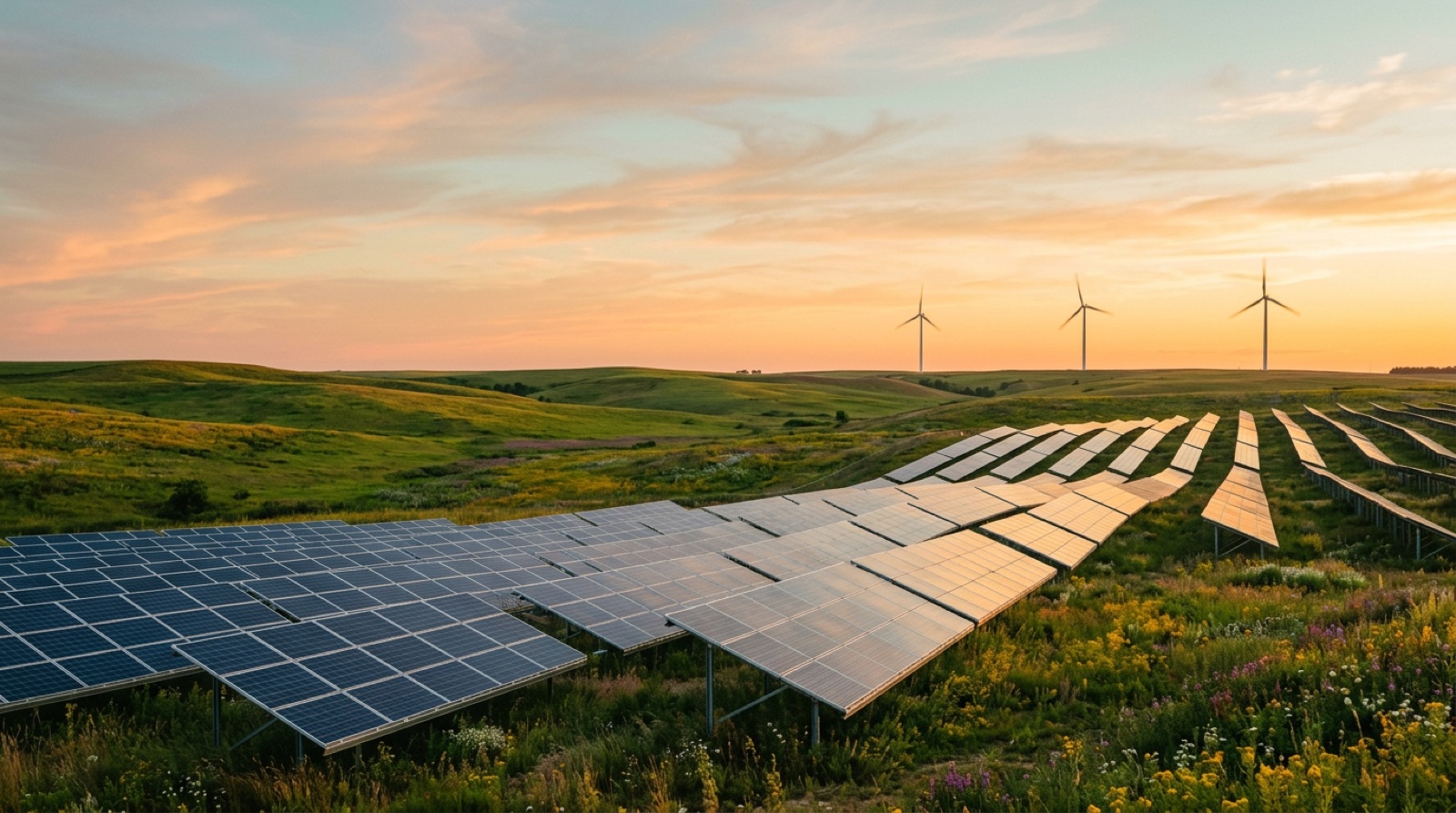
For two decades, fossil fuels have powered most of the world. In 2024 that began to change for real, and 2025 may be the year we look back on as the moment clean power tipped the scales. Here is what actually happened, why it matters, and what each of us can do to keep the momentum going.
What actually happened
If you only follow the news, climate change can feel like one long, bad headline. The signal underneath the noise is more interesting:
- In 2024, low-carbon sources (renewables plus nuclear) generated 40.9% of the world’s electricity — the highest share since the 1940s, when global electricity demand was a fraction of today’s. Ember Global Electricity Review 2025.
- Solar PV has been the world’s fastest-growing energy source for more than two decades in a row, doubling roughly every three years. IEA Renewables 2024.
- The International Energy Agency now expects global renewable capacity to nearly triple by 2030 compared to 2022, with solar and wind doing most of the heavy lifting.
- For the first time, the IEA forecast in late 2024 that renewable electricity would generate more power than coal in 2025. Early 2026 reporting from Ember and the IEA confirms that crossover is now visible in the global numbers.
None of these facts say climate change is solved. They say the energy system — the single largest source of global emissions — is moving in the right direction, faster than most plans and many pessimists expected.
Why this is a real turning point
Three things make this moment different from previous “green hype” cycles:
- Cost. Solar electricity is now the cheapest source of new power in most of the world. Onshore wind and battery storage are not far behind. When clean energy is also the cheapest energy, deployment stops being charity and starts being business.
- Scale. China alone installed more solar in 2024 than the United States has installed in its entire history. India, Brazil, Vietnam and the EU are all now in the same exponential curve.
- Industrial signal. Steel, cement, shipping and aviation — the “hard-to-abate” sectors — are no longer waiting for permission. Green steel is being shipped to car factories in Sweden, e-fuels are being produced for cargo ships, and the cement sector has its first commercial-scale carbon capture plants running. IEA Industry programme.
“The era of fossil fuel growth is ending. The next race is about who builds the clean economy first.”
— paraphrasing the IEA’s 2024 World Energy Outlook
Why we are not done
An honest climate report has to include the parts that aren’t working yet. Three big ones:
- Emissions are still rising in absolute terms. Renewables are growing fast, but global energy demand is also growing — especially in transport, heating and AI data centres. Until clean power grows faster than total demand everywhere, fossil emissions will not fall as quickly as the climate needs.
- Grids and storage are the bottleneck. We can build solar farms in months. Building the high-voltage lines and batteries to deliver that power takes years. Many countries already have more clean projects waiting in the queue than their grids can connect.
- Oceans, food and forests are out of step. The energy transition is moving; ocean warming, overfishing, deforestation and methane from agriculture are not moving as fast. The next decade has to fix the “everything else” problem too.
This is not a reason to be cynical. It is a reason to keep paying attention — and to know which levers actually move the world.
What you can actually do
One of the most damaging climate myths is that personal choices don’t matter, and the second is that only personal choices matter. Both are wrong. The honest answer is that you have several lanes, and they reinforce each other.
1. Move your own energy demand
- If you own or rent: switch to a clean electricity tariff. In many EU markets it is the same price as “regular” electricity.
- The next car you buy is the most consequential climate decision most households make. Electric drivetrains are now cheaper to run almost everywhere fossil fuels are taxed.
- Heat pumps now beat gas boilers on lifetime cost in most climates. If your boiler is older than 12 years, do the math before replacing it “like for like”.
2. Move money
- Check what your pension, savings or workplace plan is invested in. Many large funds now offer fossil-free or Paris-aligned options. Switching takes minutes; the climate impact compounds for decades.
- Support policy that makes clean choices the default — building codes, EV infrastructure, public transit, grid investment.
3. Move conversations
- Climate scientists consistently rank “talking about it” as one of the highest-leverage actions any individual can take, because it shifts what feels normal in your circle. Yale Climate Connections has good starting points.
- Share the wins, not just the warnings. People act when they believe action is possible.
For the next generation
Children born today will live most of their lives in a climate that is meaningfully different from the one we inherited. We do not get to choose whether the climate changes — that is locked in. But we still get to choose how much, and how prepared we are.
Every tenth of a degree we avoid is fewer extreme heatwaves, more stable food systems, fewer climate refugees, more biodiversity that survives. The 2025 clean-power numbers show that the avoidable part is bigger than it looked five years ago. That is the only headline we need to keep working with.
Sources & further reading
- Ember — Global Electricity Review 2025
- IEA — Renewables 2024
- IEA — World Energy Outlook 2024
- IRENA — Renewable Capacity Statistics
- Climate Action Tracker (where countries are vs. their Paris pledges)
- IPCC AR6 Synthesis Report (the science underneath all of this)
- Copernicus Climate Change Service (live temperature & emissions data)
This is post #1 of ClimateClue. We’ll cover one topic a week — energy, industry, oceans, policy — with the same approach every time: verified facts, named sources, no panic, no greenwash.